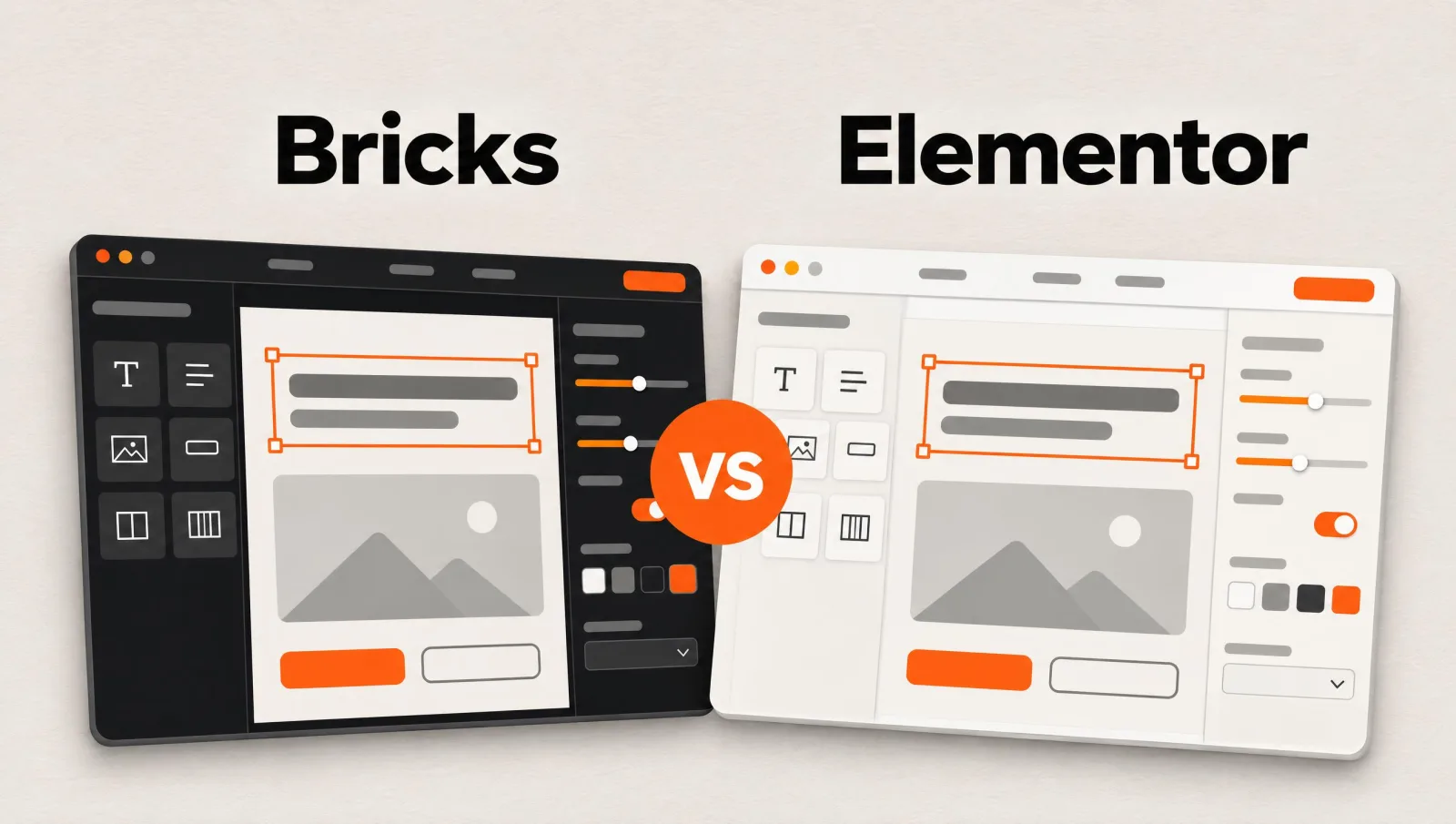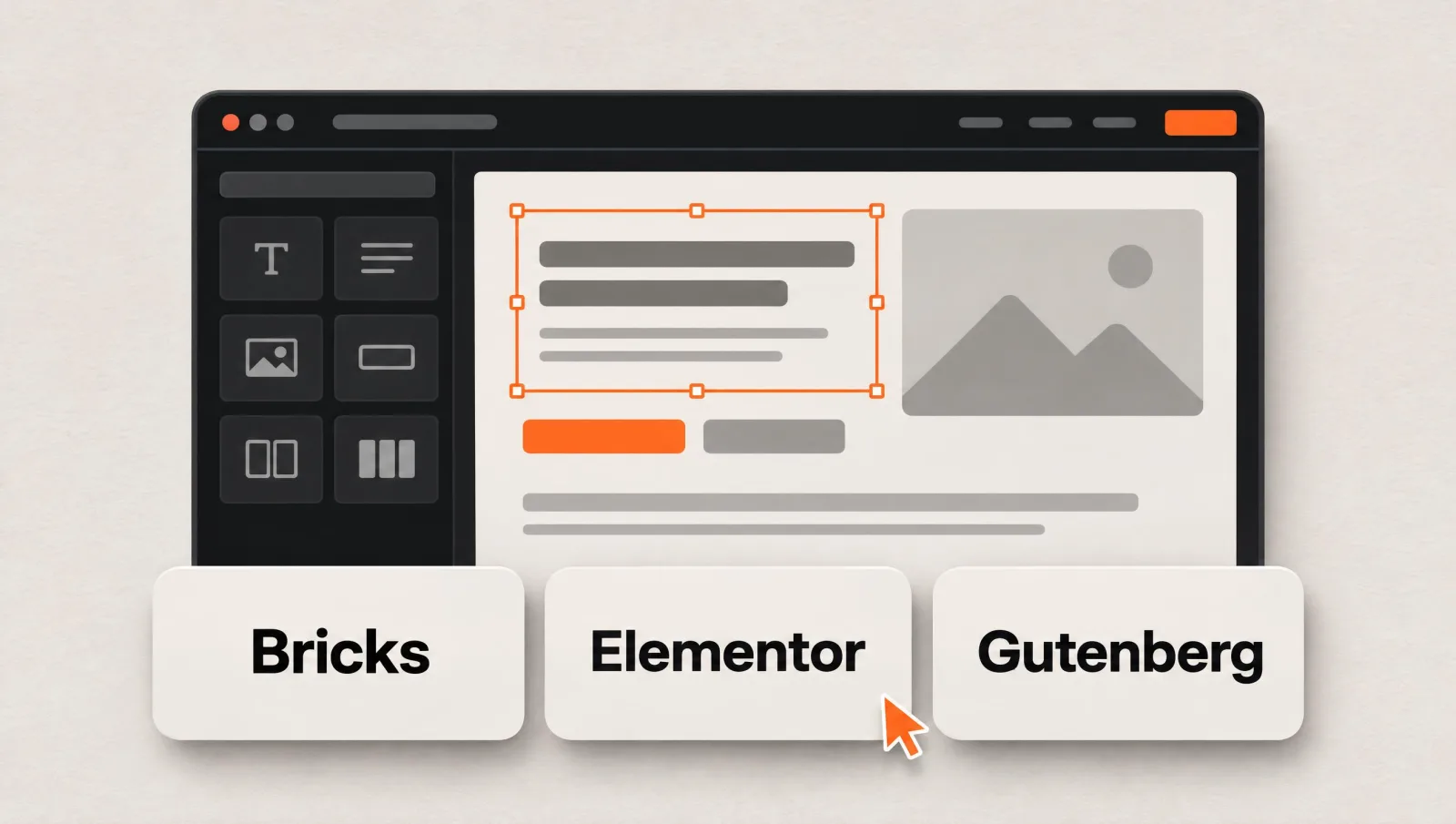
Debates about whether Bricks beats Elementor, or whether Gutenberg will finally “kill” page builders, often sound like sports rivalries. Your client and your budget don’t care who won in the YouTube comments. What matters is the deadline, stability, maintenance and results. That’s why we choose tools per project, not per taste.
Process first, tool second
Before choosing a builder, answer a few questions about how the site will actually live:
- Who will edit content – you, a marketing team or a developer?
- How often do pages change, and how many landing pages are you planning?
- Is the team used to drag-and-drop, or do they prefer a system?
- Does the site have a blog and lots of content?
- How critical are speed and Core Web Vitals for your business?
The same builder can be great for one project and wrong for another. The question isn’t “which is best” but “which carries the least risk in our case”.
Elementor: the fastest start and the biggest ecosystem
Elementor is often the quickest route for beginners and marketing teams: a huge library of ready-made elements, plenty of tutorials and add-ons for almost anything. Its weakness is that same ease – it’s easy to overdo add-ons, widgets, fonts and effects until the site gets heavy. Elementor can be fast, but it needs discipline and a clean setup from day one.
Bricks: systems, classes and maintainability
Bricks is chosen for its systematic approach: CSS classes, global styles, a flexible layout model (flex and grid) and a developer-friendly feel. The result is usually cleaner output and easier maintenance, especially across multiple sites or larger page structures. The downside: beginners find it stricter, because you have to think in systems rather than just clicking.
Gutenberg and Full Site Editing: the standard and content
Gutenberg is a different philosophy: stay close to the WordPress standard and you get the path most resilient to future changes. It’s excellent for content-first sites – media, education, blogs and brands that don’t need special layout tricks. For quickly assembling complex landing pages without extra blocks, it can feel slower and more limited.
The best test: the cost of change
The most useful question isn’t “how fast can we build the site” but how much does a change cost. How long does it take to change the header, the color system, or to create 20 new landing pages tomorrow? The tool that makes changes easy and chaos-free is the better tool – even if it takes longer to learn.
Ask yourself: what is most likely to go wrong in 6 to 12 months? A system designed to absorb those changes saves both time and money.
How to decide in practice
- Build the same single test page in two tools.
- Measure how quickly you build it and how cleanly you maintain the styles.
- Judge how easily you can hand it over to a client or marketing team.
A decision based on a real test beats any comparison on paper.
The mistakes we see most often
- Several plugins for the same job – two sliders, three form plugins, four animation packs.
- Styling every element by hand instead of using global styles and components.
- Design used as a substitute for proof: without case studies, numbers and references, no builder builds trust.
- No maintenance agreement, so every update becomes an emergency.
In short
Elementor wins when you need a fast start and an ecosystem. Bricks wins when you need a system and maintainability. Gutenberg wins when you need standards and a focus on content. The best choice is the one that reduces risk for your specific project – technologies change, but clarity, consistency and sustainability always win.
If you’re choosing a tool for a new website, we’re happy to look at your case – read more about how we work on our website development page.