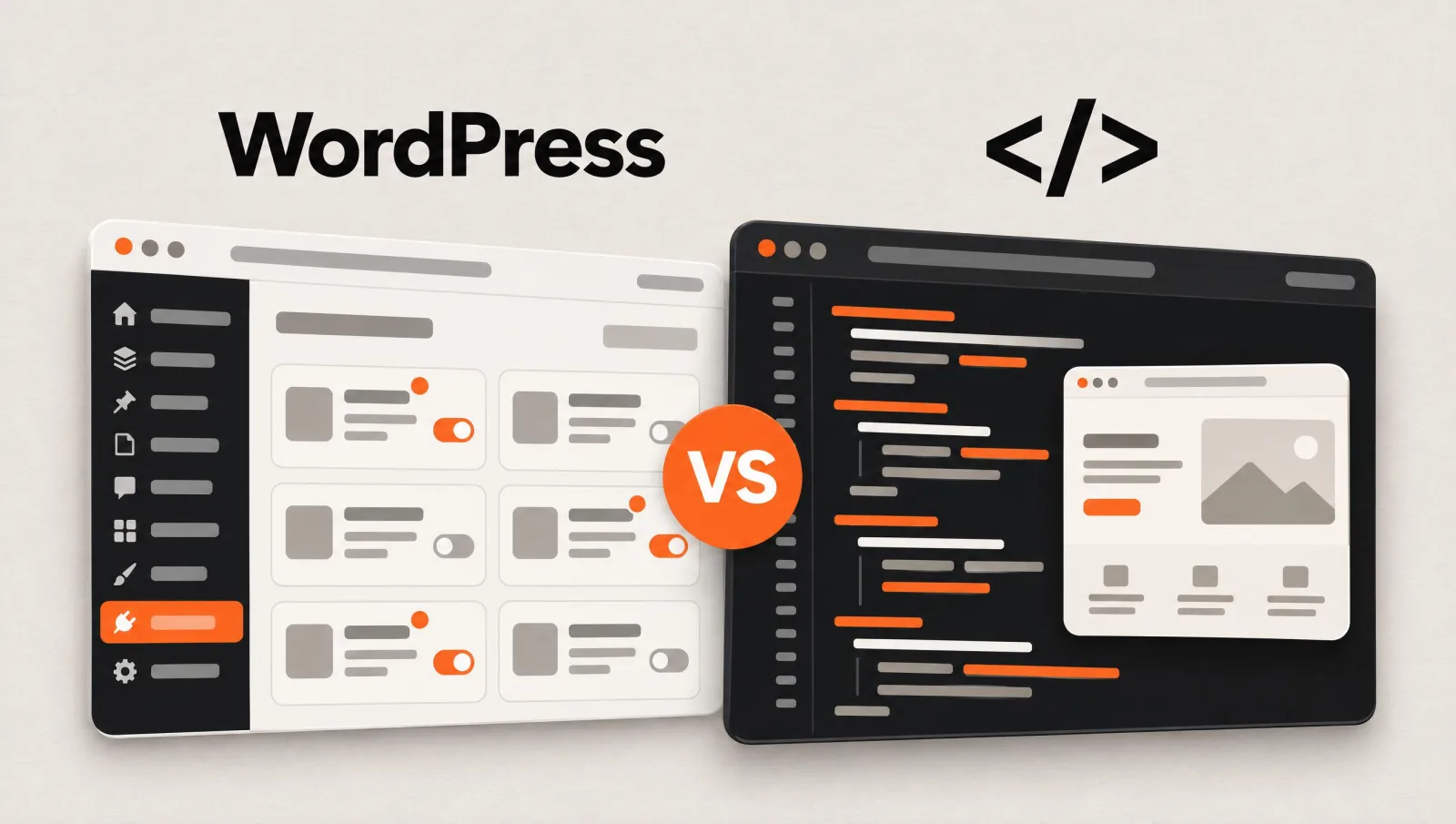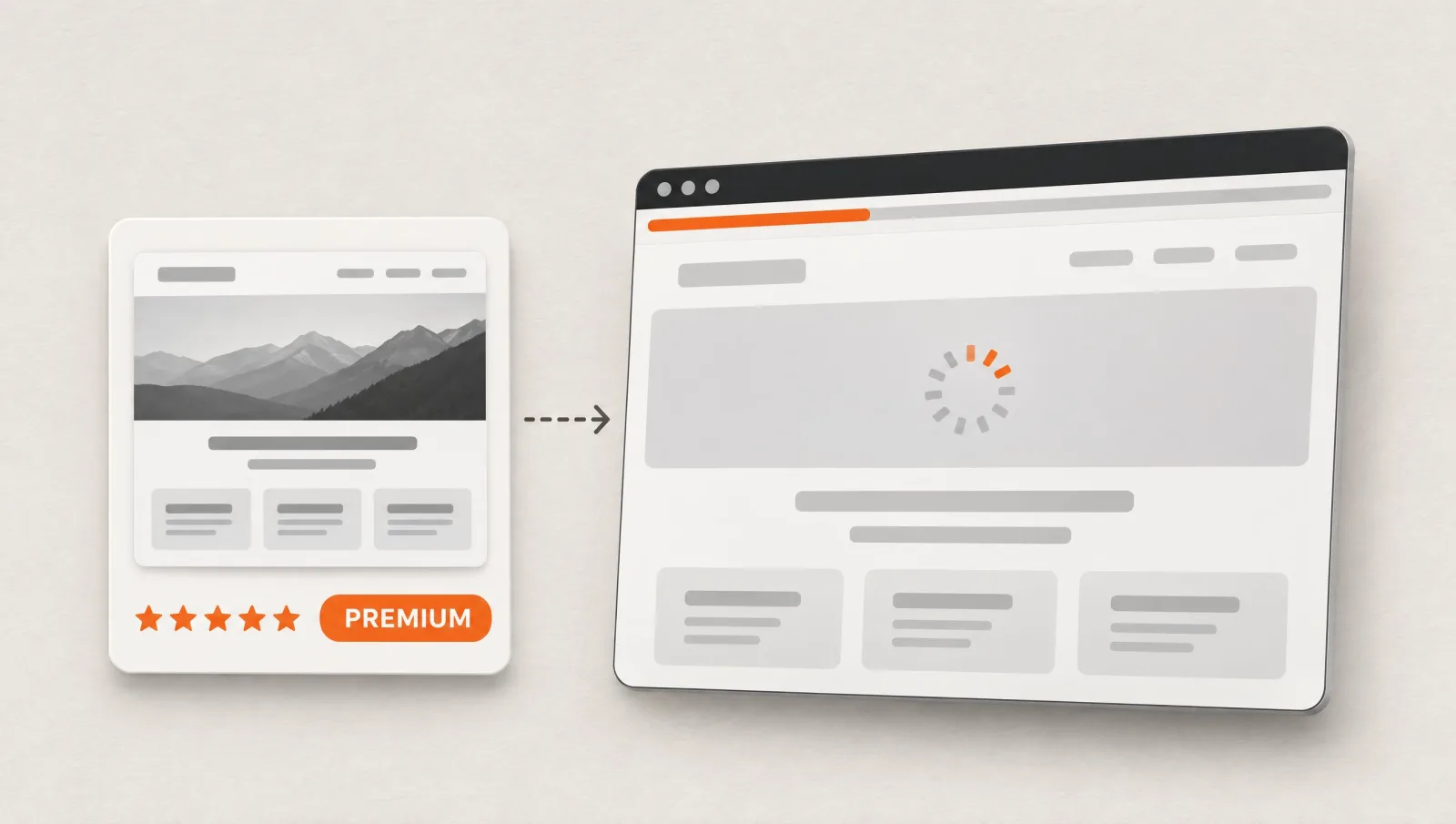
A scenario we see all the time: a premium theme is purchased, the logo goes in, the colors are changed – and a professional-looking website is expected. Then comes the disappointment. The site looks generic, loads slowly, and every change breaks the layout. The problem isn’t the theme. It’s the expectation that a theme can replace strategy, content and a system.
What a premium theme actually gives you
A premium theme usually offers three things: ready-made page templates, a set of typography and colors, and lots of options. That’s a good start for someone who knows what they’re doing. But too many options quickly lead to visual chaos – a slider gets added, then animations, then more plugins, and the theme becomes colorful packaging with nothing inside.
A premium feel comes from clarity
A site feels premium when, within five seconds, a visitor understands who you are, what you do, for whom, and why you. A theme can’t write your offer, can’t invent results, and can’t make up for poor photos, generic copy or a lack of proof.
Consistency: a system, not a collage
A premium website looks like one system:
- one typographic hierarchy,
- repeating components,
- one icon style,
- a consistent spacing rhythm,
- one style of call-to-action buttons.
Get that right and even a free theme can look serious. Get it wrong and even the most expensive theme won’t help.
Speed and maintenance
The impression collapses when a site loads slowly, when the layout shifts while loading, or when something renders badly on a phone. Many premium themes include “everything and the kitchen sink” to cover as many niches as possible, so the first job is often to remove the excess. Fewer plugins and fewer sections often beat fifteen extra widgets.
What you’re really buying
You’re buying a starting frame. If you have good content, a clear structure and discipline, the frame saves time. If you don’t, it just gets you to a generic website faster.
How to get the most out of it without overdoing it
- Define 3–5 key pages: home, services, work or case studies, about and contact.
- Set up the system: typography, colors, buttons and spacing – before any template.
- Only then add templates and adapt them to the system, not the other way around.
- Add proof: results, references and a description of your process.
Only then does the theme really “do” its job.
The mistakes that ruin the impression most often
- Several plugins for the same job – sliders, animations, forms.
- Styling everything by hand instead of using global styles.
- Design as a substitute for trust, without numbers or references.
- No maintenance agreement, so updates become a risk.
Conclusion
A premium theme is a tool, not a strategy. A premium website is the result of a clear message, solid proof and a consistent system. A theme can help, but it can’t replace thinking.
If you want a website that looks and performs like a premium product, see how we approach website development – from structure and messaging to speed.